
COURSE OVERVIEW
SE0015 : Structural Reliability Analysis in Civil Engineering

OVERVIEW
| COURSE TITLE | : | SE0015 : Structural Reliability Analysis in Civil Engineering |
| COURSE DATE | : | Nov 22 - Nov 26 2026 |
| DURATION | : | 5 Days |
| INSTRUCTOR | : | - |
| VENUE | : | Dubai, UAE |
| COURSE FEE | : | $ 5500 |
Course Description
This practical and highly-interactive course includes real-life case studies and exercises where participants will be engaged in a series of interactive small groups and class workshops.
The catastrophic collapse of the Minneapolis bridge in August 2nd, 2007 brought the attention of the world again to the importance of structural reliability analysis. The 581-meter entire length of the eight-lane bridge over the Mississippi River suddenly collapsed when less than 100 cars and buses were traveling on it. The American Society of Civil Engineers (ASCE) advised the authorities to carry out structural reliability analysis for all similar bridges in the USA and Canada. The fundamental aim of structural reliability analysis is the determination of a safety level of the structure. Under some hypotheses on the uncertain quantities, and by defining the state of failure, it can be possible to find the evolution of the failure probability of the structure along its life span and to verify that the design satisfies the safety considerations.
The reliability of a structure is traditionally achieved by deterministic methods using safety factors calculated generally under conservative estimators of influent parameters. Structural reliability analysis methods use probabilistic approaches for assessing safety factors or for optimizing maintenance and inspection programs. These methods become essential in the frame of long-term maintenance or life extension of the structure.
Structural reliability has become a discipline of international interest, addressing issues such as the safety of buildings, bridges, towers and other structures. This course is designed to address the important issue of predicting the safety of structures at the design stage and all other stages during the life span of the structures. Attention will be focused during the course on the development and definition of limit states such as serviceability and ultimate strength, the definition of failure and the various models which might be used to describe strength and loading. Much consideration will be given to problem formulation and to the various techniques which can be applied to problem solution. These include the First Order Second Moment method and their derivatives, as well as various Monte Carlo techniques. Each of these will be described in some detail and example applications will be given. Structural systems will also be described, as well as the effect of time on reliability estimation, and the development of design code rules on the basis of limit state principles as under-pinned by probability theory. Furthermore, procedures for the reliability estimation of existing structures will also be covered in the course.
link to course overview PDF
The catastrophic collapse of the Minneapolis bridge in August 2nd, 2007 brought the attention of the world again to the importance of structural reliability analysis. The 581-meter entire length of the eight-lane bridge over the Mississippi River suddenly collapsed when less than 100 cars and buses were traveling on it. The American Society of Civil Engineers (ASCE) advised the authorities to carry out structural reliability analysis for all similar bridges in the USA and Canada. The fundamental aim of structural reliability analysis is the determination of a safety level of the structure. Under some hypotheses on the uncertain quantities, and by defining the state of failure, it can be possible to find the evolution of the failure probability of the structure along its life span and to verify that the design satisfies the safety considerations.
The reliability of a structure is traditionally achieved by deterministic methods using safety factors calculated generally under conservative estimators of influent parameters. Structural reliability analysis methods use probabilistic approaches for assessing safety factors or for optimizing maintenance and inspection programs. These methods become essential in the frame of long-term maintenance or life extension of the structure.
Structural reliability has become a discipline of international interest, addressing issues such as the safety of buildings, bridges, towers and other structures. This course is designed to address the important issue of predicting the safety of structures at the design stage and all other stages during the life span of the structures. Attention will be focused during the course on the development and definition of limit states such as serviceability and ultimate strength, the definition of failure and the various models which might be used to describe strength and loading. Much consideration will be given to problem formulation and to the various techniques which can be applied to problem solution. These include the First Order Second Moment method and their derivatives, as well as various Monte Carlo techniques. Each of these will be described in some detail and example applications will be given. Structural systems will also be described, as well as the effect of time on reliability estimation, and the development of design code rules on the basis of limit state principles as under-pinned by probability theory. Furthermore, procedures for the reliability estimation of existing structures will also be covered in the course.
TRAINING METHODOLOGY
This interactive training course includes the following training methodologies:
LecturesPractical Workshops & Work Presentations
Hands-on Practical Exercises & Case Studies
Simulators (Hardware & Software) & Videos
In an unlikely event, the course instructor may modify the above training methodology for technical reasons.
VIRTUAL TRAINING (IF APPLICABLE)
If this course is delivered online as a Virtual Training, the following limitations will be applicable:
| Certificates | : | Only soft copy certificates will be issued |
| Training Materials | : | Only soft copy materials will be issued |
| Training Methodology | : | 80% theory, 20% practical |
| Training Program | : | 4 hours per day, from 09:30 to 13:30 |
RELATED COURSES

SE0155 : Road Pavement Design, Maintenance & Rehabilitation Techniques
- Date: Oct 25 - Oct 29 / 3 Days
- Location: Al Khobar, KSA
- Course Details Register

SE0045 : Civil Building Maintenance
- Date: Oct 25 - Oct 29 / 3 Days
- Location: Al Khobar, KSA
- Course Details Register

SE0052 : Construction Management
- Date: Oct 18 - Oct 22 / 3 Days
- Location: Al Khobar, KSA
- Course Details Register
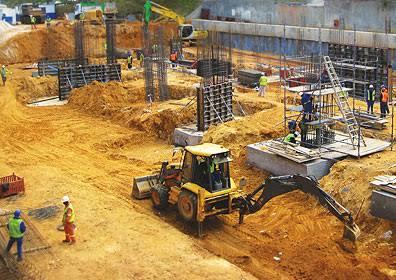
SE0072 : Geotechnical Engineering & Soil Analysis
- Date: Oct 18 - Oct 22 / 3 Days
- Location: Muscat, Oman
- Course Details Register