
COURSE OVERVIEW
LE1016 : Laboratory Analysis of the Chemical & Physical Properties of Water
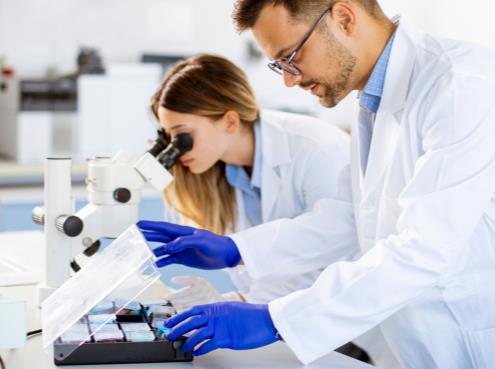
OVERVIEW
| COURSE TITLE | : | LE1016 : Laboratory Analysis of the Chemical & Physical Properties of Water |
| COURSE DATE | : | Sep 28 - Oct 02 2025 |
| DURATION | : | 5 Days |
| INSTRUCTOR | : | Mr. Paul Patsi |
| VENUE | : | Dubai, UAE |
| COURSE FEE | : | $ 5500 |
| Request For Course Outline | ||
Course Description
This course is designed to provide participants with a detailed and up-to-date overview of Laboratory Analysis of the Chemical & Physical Properties of Water. It covers the types of water sources and the importance of water quality analysis, regulatory standards and key chemical and physical indicators; the laboratory safety procedures, sampling techniques and preservation, calibration and standardization of instruments; and the analytical techniques, laboratory quality control (QC) and quality assurance (QA), temperature measurement and turbidity analysis.
Further, the course will also discuss the color determination, conductivity and total dissolved solids (TDS) measurement, pH measurement and odor and taste evaluation; the alkalinity and acidity testing, hardness determination, chloride determination, fluoride analysis and sulfate determination; the nitrate and nitrite analysis, dissolved oxygen (DO) measurement, biochemical oxygen demand (BOD) and chemical oxygen demand (COD); the ammonia nitrogen (NH3-N) determination, trace metals by atomic absorption spectroscopy (AAS) and heavy metal testing using ICP-OES; and the phosphorus and phosphate analysis and oil and grease determination.
During this interactive course, participants will learn the total suspended solids (TSS) and volatile solids (VS); the microbiological indicators of water quality covering total coliforms and E. coli detection, incubation and identification, interpretation of results and sterile sampling procedures; and the interpretation of laboratory results through statistical validation of data, detection limits and uncertainty, comparing with regulatory standards and trend analysis.
TRAINING METHODOLOGY
This interactive training course includes the following training methodologies:
LecturesPractical Workshops & Work Presentations
Hands-on Practical Exercises & Case Studies
Simulators (Hardware & Software) & Videos
In an unlikely event, the course instructor may modify the above training methodology for technical reasons.
VIRTUAL TRAINING (IF APPLICABLE)
If this course is delivered online as a Virtual Training, the following limitations will be applicable:
| Certificates | : | Only soft copy certificates will be issued |
| Training Materials | : | Only soft copy materials will be issued |
| Training Methodology | : | 80% theory, 20% practical |
| Training Program | : | 4 hours per day, from 09:30 to 13:30 |
RELATED COURSES
LE0075 : Modern Chemical Laboratory Analytical Instrumentation Equipment Calibration Operations Quality and Safety
- Date: Sep 27 - Sep 01 / 3 Days
- Location: Doha, Qatar
- Course Details Register

LE0140 : Modern Laboratory Management Effective Management of the Chemical Analysis Support
- Date: Oct 04 - Oct 08 / 3 Days
- Location: Al Khobar, KSA
- Course Details Register

LE0032 : Emerging Technologies in Water Quality Analysis
- Date: Sep 21 - Sep 25 / 3 Days
- Location: Abu Dhabi, UAE
- Course Details Register
LE0145 : Laboratory Information Management System (LIMS)
- Date: Sep 27 - Oct 01 / 3 Days
- Location: Istanbul, Turkey
- Course Details Register