
COURSE OVERVIEW
PE0099 : Grinding Technology in Cement Production
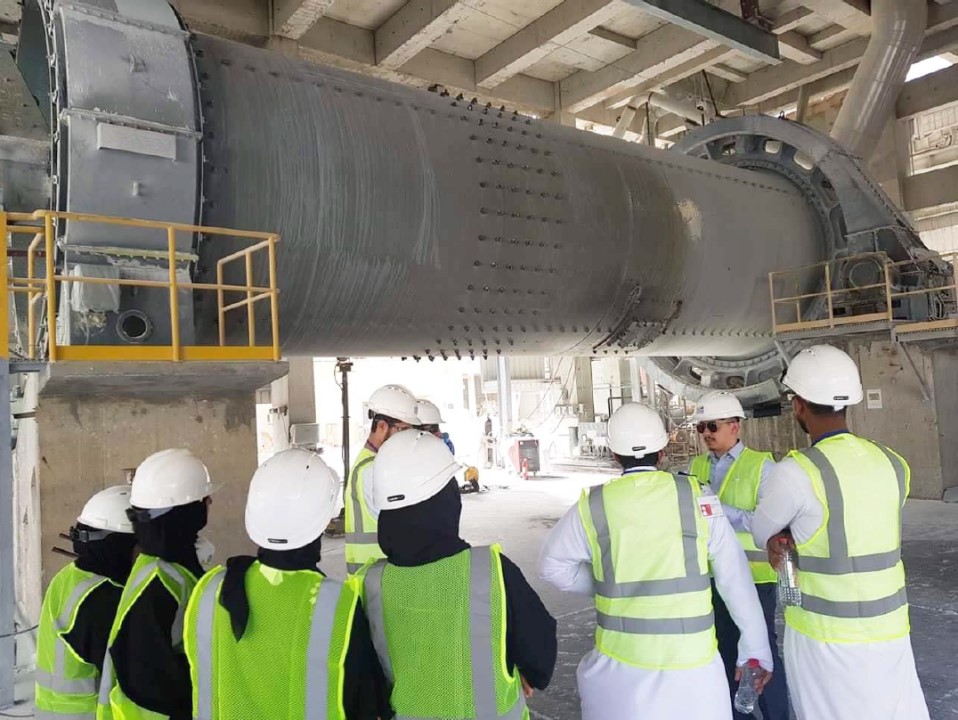
OVERVIEW
| COURSE TITLE | : | PE0099 : Grinding Technology in Cement Production |
| COURSE DATE | : | Jun 22 - Jun 26 2025 |
| DURATION | : | 5 Days |
| INSTRUCTOR | : | Mr. Saad Bedir |
| VENUE | : | Riyadh, KSA |
| COURSE FEE | : | $ 5500 |
| Request For Course Outline | ||
Course Description
This practical and highly-interactive course includes real-life case studies and exercises where participants will be engaged in a series of interactive small groups and class workshops.
This course is designed to provide participants with a detailed and up-to-date overview on Grinding Technology in Cement Production. It covers the cement manufacturing processes and the role of grinding in cement production; the types of cement and their requirements for grinding and key performance indicators in grinding; the materials and properties of grinding including the basics of grinding mechanisms; the types of grinding equipment, grinding media and their impact and health, safety and environmental considerations; the ball mill operation, vertical roller mill (VRM) operation and high-pressure grinding rolls (HPGRs) operation; the function of separators in grinding systems and types of separators; and the factors affecting separator efficiency and optimization of separator performance.
Further, the course will also discuss the energy management in grinding, control systems and automation, pre-grinding systems and finish grinding systems; the types and chemistry of grinding aids, mechanism of action of grinding aids, dosage and compatibility with clinker; the environmental considerations of additives and process modeling approaches; the benefits of simulation in system design and simulation tools for grinding circuits; and the new developments in grinding equipment, hybrid grinding technologies, nanotechnology and ultra-fine grinding and future trends in cement grinding.
During this interactive course, participants will learn the quality control in grinding and laboratory testing for grinding optimization; the over-grinding and under-grinding issues, clinker-related grinding problems, separator inefficiencies and causes of high wear in grinding systems; the techniques for identifying grinding inefficiencies, data collection and analysis for troubleshooting and problem-solving frameworks; monitoring wear in grinding components and scheduling preventive maintenance; managing spare parts and reducing maintenance downtime; the relationship between grinding and cement hydration; the effects of grinding on cement strength development; conducting grinding audits and using tools and techniques for data collection; the benchmarking, gap analysis and reporting audit findings and recommendations; reducing energy consumption in grinding and using alternative materials to reduce clinker factor; the carbon capture technologies and the recycling of cement plant by-products; and the digital transformation in grinding, training and capacity building and future trends and innovations.
link to course overview PDF
TRAINING METHODOLOGY
This interactive training course includes the following training methodologies:
LecturesPractical Workshops & Work Presentations
Hands-on Practical Exercises & Case Studies
Simulators (Hardware & Software) & Videos
In an unlikely event, the course instructor may modify the above training methodology for technical reasons.
VIRTUAL TRAINING (IF APPLICABLE)
If this course is delivered online as a Virtual Training, the following limitations will be applicable:
| Certificates | : | Only soft copy certificates will be issued |
| Training Materials | : | Only soft copy materials will be issued |
| Training Methodology | : | 80% theory, 20% practical |
| Training Program | : | 4 hours per day, from 09:30 to 13:30 |
This course is no longer available.
Please check below for other scheduled dates.
RELATED COURSES
PE0605 : Ammonia Manufacturing & Process Troubleshooting
- Date: Sep 20 - Sep 24 / 3 Days
- Location: Istanbul, Turkey
- Course Details Register
PE0120 : Catalyst Selection & Production Optimization
- Date: Sep 20 - Sep 24 / 3 Days
- Location: London, United Kingdom
- Course Details Register
PE0865 : Gas Compression and Expansion Compressors and Turbines Certification
- Date: Sep 20 - Sep 24 / 3 Days
- Location: Doha, Qatar
- Course Details Register
PE0060 : Fertilizer Manufacturing Process Technology
- Date: Sep 20 - Sep 24 / 3 Days
- Location: Doha, Qatar
- Course Details Register