
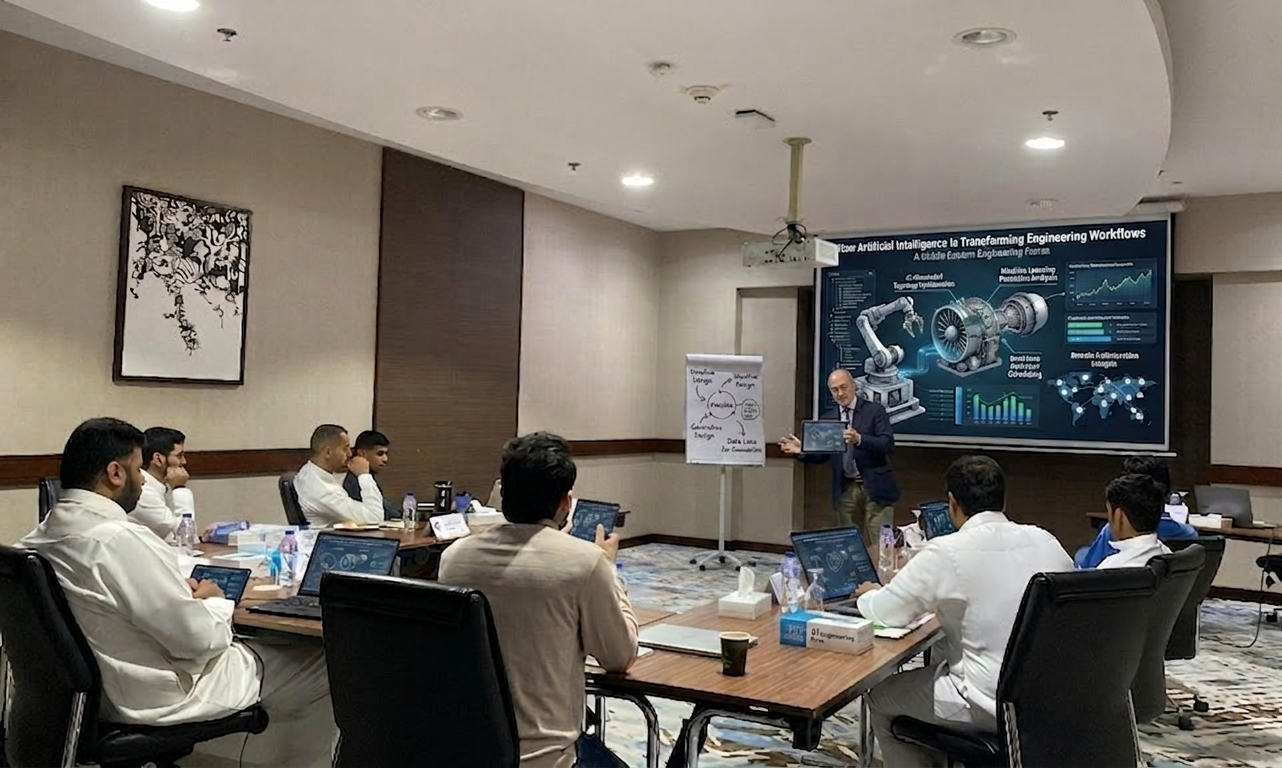
Engineering has always been about precision, efficiency, and solving real-world problems. What is changing today is the speed, intelligence, and scale at which solutions are developed. Artificial intelligence is no longer confined to research labs or tech startups. It is now deeply embedded in daily engineering operations across industries.
The rise of AI in engineering is not about replacing professionals. Instead, it strengthens their capabilities. Engineers now have tools that analyze large data sets, predict outcomes, and automate repetitive tasks while keeping human expertise central. By integrating AI into workflows, teams achieve faster results, reduce errors, and optimize resources in ways previously impossible.
The Changing Role Of AI In Engineering
The role of AI in engineering has shifted from experimental support to operational necessity. AI systems now assist with modeling, simulation, risk assessment, and performance monitoring in real time. Organizations adopting AI make more confident decisions, improve efficiency, and reduce costs without compromising safety or quality.
Engineers no longer spend hours sorting spreadsheets or running sequential simulations. Instead, intelligent systems generate insights instantly, letting teams focus on design improvements, strategy, and long-term optimization. AI acts as an analytical partner, augmenting human judgment rather than replacing it.
Core Engineering Applications Of AI
The most visible engineering applications of AI appear in design, maintenance, quality control, and infrastructure monitoring. These applications are now standard in sectors such as manufacturing, aerospace, civil engineering, and utilities.
Intelligent Design And Simulation
Modern AI-driven design platforms generate multiple design variations based on performance goals. Engineers input constraints such as weight, material strength, cost, and environmental factors. The system produces optimized options within minutes, saving weeks of manual work.
This shortens development cycles and improves product performance. Generative design allows teams to explore innovative configurations. Aerospace engineers, for example, can create lighter structures without compromising safety, and automotive designers can improve fuel efficiency while meeting strict regulations.
Predictive Maintenance Systems
In industrial settings, AI analyzes vibration data, temperature readings, and operating conditions. Systems detect early warning signs of failure before equipment breaks down.
Predictive maintenance reduces unplanned downtime and increases reliability. Engineers schedule interventions only when necessary rather than following rigid calendars. This approach saves money and extends equipment life. Many manufacturing and energy companies report significant reductions in failures after implementing AI-based predictive maintenance.
Smart Infrastructure Monitoring
AI-powered sensors monitor bridges, pipelines, and buildings in real time. Structural stress, corrosion patterns, and load distribution are continuously evaluated, allowing engineers to act before safety risks escalate.
Civil projects benefit greatly from this approach. Early detection of material fatigue or stress prevents costly repairs, minimizes disruptions, and enhances public safety. AI also helps prioritize inspections, ensuring resources focus on critical issues.
AI Tools For Engineers In Everyday Work
Today, AI tools for engineers are integrated into common engineering platforms rather than operating as standalone systems. These tools complement existing workflows and simplify complex tasks.
Examples include:
- AI-assisted computer-aided design software
- Machine-learning-based finite element analysis
- Digital twins simulating real-world performance
- Automated fault-detection dashboards
- Intelligent scheduling systems optimizing timelines
These tools allow engineers to focus on creative problem-solving instead of repetitive analysis. AI acts as a collaborator, handling tedious calculations and providing actionable insights.
Traditional Workflows Versus AI-Enhanced Workflows
Comparing legacy processes with AI-supported approaches highlights the transformation.
| Engineering Task | Traditional Method | AI-Enhanced Method |
| Data Processing | Manual review and static reporting | Real-time analytics with predictive alerts |
| Design Iterations | Step-by-step manual revisions | Generative, multi-scenario modeling |
| Maintenance Scheduling | Calendar-based servicing | Condition-based predictive maintenance |
| Risk Analysis | Historical estimation | Data-driven forecasting models |
| Quality Inspection | Human visual checks | Computer-vision anomaly detection |
The table shows that AI improves speed and accuracy, while engineers supervise and validate outputs.
Benefits Of AI In Engineering Workflows
The benefits of AI in engineering extend far beyond automation. Organizations gain advantages that impact cost, performance, and innovation.
Key benefits include:
- Faster project turnaround times
- Lower operational and maintenance costs
- Improved system reliability
- Higher-quality design outputs
- Enhanced safety monitoring
- Better data-driven planning
In water infrastructure projects, AI analyzes flow rates and treatment efficiency. Engineers taking wastewater treatment courses at Haward Technology Middle East are increasingly introduced to intelligent monitoring tools that optimize chemical dosing and energy use. This blend of domain expertise and AI leads to safer, more efficient systems.
Human Expertise Remains Essential
AI processes data, but engineers interpret results. Human oversight ensures outputs meet safety standards, regulatory requirements, and practical constraints.
Engineers are responsible for:
- Defining system objectives
- Validating model assumptions
- Interpreting predictive insights
- Making final implementation decisions
The role of AI in engineering is supportive, not authoritative. AI enhances judgment, reduces repetitive work, and identifies patterns that humans might miss. Ethical considerations, compliance, and strategic planning remain human responsibilities.
Data As The Foundation Of AI Systems
AI performance depends on data quality. Engineering environments generate information from sensors, inspections, and operational logs. Well-structured, clean data ensures reliable AI outputs.
High-quality data enables:
- Accurate predictive modeling
- Reduced algorithm bias
- Long-term performance tracking
- Transparent reporting
Organizations investing in strong data pipelines, validation, and cybersecurity see better results. Engineers must understand the data feeding AI tools to maximize performance and reliability.
Industry-Specific Examples Of AI Integration
AI impacts multiple engineering disciplines in measurable ways.
Mechanical Engineering
Machine-learning systems analyze vibration and temperature to predict wear before failure. Maintenance teams can intervene proactively.
Electrical Engineering
Smart-grid algorithms balance demand, detect faults, and optimize power distribution in real time. Utilities reduce outages and improve efficiency.
Chemical Engineering
AI process control systems adjust reactions in real time to maximize yield, reduce waste, and improve safety.
Civil Engineering
Structural health monitoring detects micro-cracks and stress concentrations long before visible damage. Engineers plan repairs proactively, extending infrastructure lifespan.
Preparing Engineers For AI-Integrated Workflows
As AI adoption grows, engineers must expand their skills to remain competitive.
Essential competencies include:
- Data analytics fundamentals
- Understanding machine-learning concepts
- System integration techniques
- Cybersecurity and risk awareness
- Cross-disciplinary collaboration
Training programs and certifications help engineers build these skills. Continuous learning ensures professionals remain current with AI innovations, enhancing careers and project outcomes.
Long-Term Outlook For AI In Engineering
The future of AI in engineering is promising. As models improve, computing power increases, and data availability expands, engineers can expect more integrated systems.
Upcoming developments may include:
- Facility-wide digital twins
- Fully integrated predictive maintenance ecosystems
- Autonomous monitoring systems
- AI-supported compliance and safety evaluation
Organizations adopting structured AI strategies and workforce training will see measurable gains. Responsible AI use ensures safety, efficiency, and innovation.
Conclusion
Artificial intelligence is reshaping how engineers design, monitor, and maintain systems. From predictive maintenance to generative design, AI transforms workflows across industries. The engineering applications of AI show that true impact lies in enhancing human expertise, reducing repetitive work, and improving decision-making.
Teams combining skilled engineers with AI achieve faster results, improved safety, and better resource use. The future of engineering is not only new tools but stronger collaboration between humans and intelligent systems.
To prepare for this shift, Haward Technology Middle East offers professional programs for technical leaders and engineers. Our executive management courses online provide structured learning to help professionals integrate advanced technologies into organizational strategy. Contact us today to empower your team for an AI-driven future!